
In this article
Let me say the part most blonde-extension listings won't: blonde Indian hair is bleached.
Not "rare blonde donors." Not "naturally golden." India is a country of dark-haired people, and essentially every blonde set you'll ever see — from a soft #27 honey to an icy platinum — started as dark single-donor hair and was lifted in a controlled process to reach the shade. That's not a confession; it's just chemistry, and you deserve to hear it before you spend.
Here's the reassuring half of that truth: lifting color does not make hair fake. It's still genuine, cuticle-intact, single-donor human hair — it has simply been color-processed, the same way a colorist lifts your own hair in a salon. Understanding that one fact changes how you shop for blonde, how you care for it, and why it behaves the way it does.
Why blonde Indian hair is lifted, not grown
Hair color comes from melanin. Dark Indian hair is loaded with it, which is exactly why it's so prized — that density is what gives single-donor hair its strength and shine. To turn it blonde, that pigment has to be lightened out, step by step, until the strand reaches the target level.
The reason we source blonde from Indian donor hair anyway is the same reason we source everything else: the raw material is excellent. You start with strong, cuticle-aligned, single-donor hair, and you lift it carefully. The alternative — chasing genuinely light-haired donor hair — means lower-grade comb-waste from other regions, the kind that's acid-stripped and silicone-coated to fake smoothness. We'd rather take superb hair and lift it honestly than sell you weak hair that happened to be pale.
So when you read "raw" or "virgin" on a Prarvi listing, that language is reserved for our natural-black sets — hair that was never color-processed. A blonde set is never called virgin here, because it isn't. It's single-donor, cuticle-intact, and lifted. All three things are true at once, and we'd rather say so.
Why blonde costs more — and that's not a markup story
Blonde is usually the most expensive shade in any honest line, and it helps to know why so the price reads as fair rather than arbitrary:
- It's processed by hand, carefully. Lifting dark hair to a clean light level is slow, skilled work. Rush it and you scorch the cuticle; do it right and it takes time and product.
- Yield drops. Lightening is hard on hair, so more of the batch gets rejected on the way to a usable blonde set. You're paying for the strands that survived the process beautifully.
- Light hair shows everything. On dark hair a small flaw hides. On platinum, every bit of unevenness is visible, so the quality bar to ship is higher.
None of that is a reason to overpay — it's a reason a suspiciously cheap platinum set should make you cautious. Bargain blonde is usually where the corners get cut.
How to choose a blonde shade
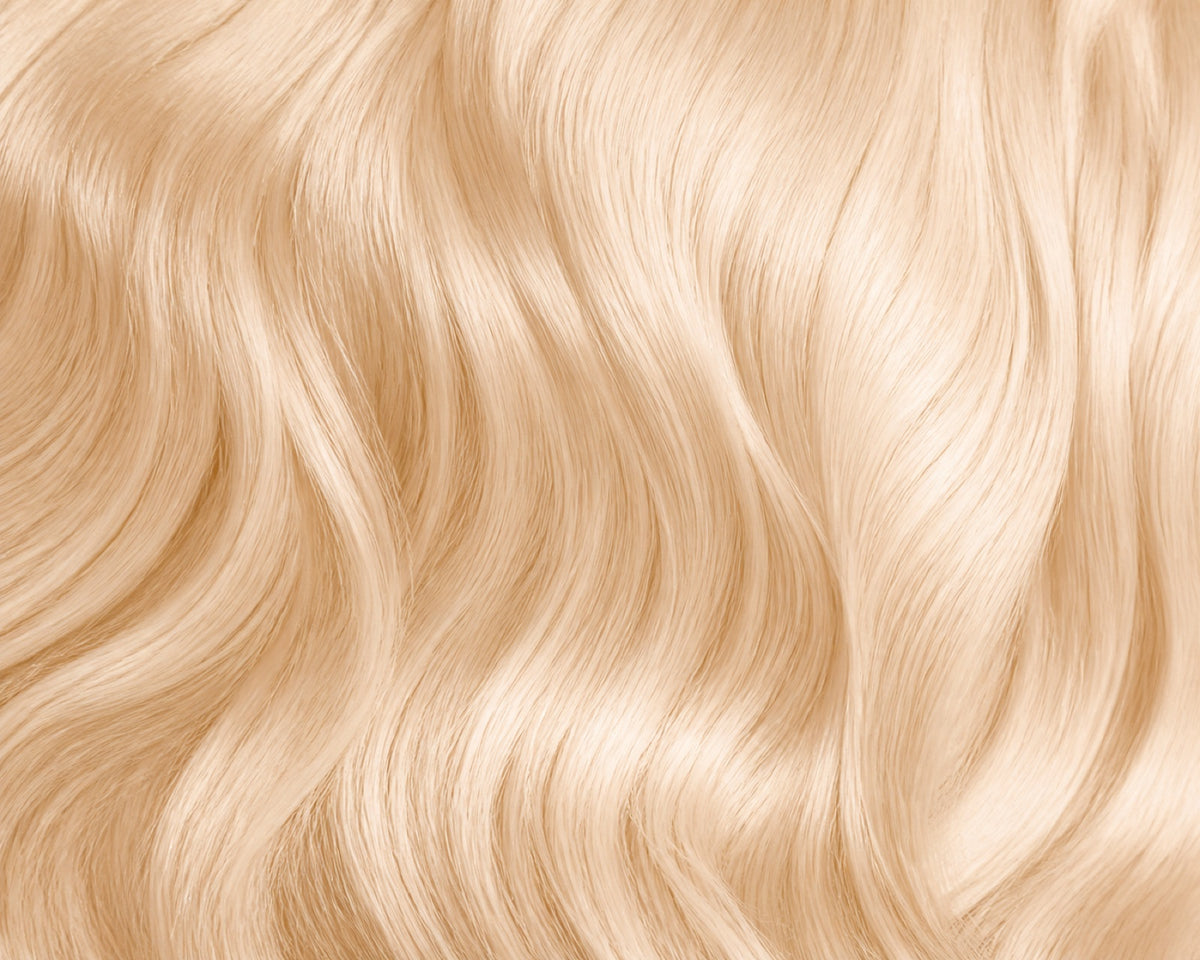
Blonde isn't one color; it's a family, and the names are really describing two things at once — how light the hair is (the level) and how warm or cool it reads (the tone). A quick map of the shades you'll see most:
- #22 (light ash / sandy blonde). A softer, cooler blonde with beige undertones. Reads natural and grown-up; very forgiving on lighter-skinned brunettes going lighter.
- #27 (strawberry / honey blonde). Warm golden honey. The most flattering "real blonde" for a lot of people because the warmth looks sun-grown rather than processed.
- #613 (light blonde / "beach blonde"). A bright, pale blonde — the workhorse of the blonde world and the base most colorists start from to custom-tone or root-shadow.
- Platinum. The lightest, coolest end. Stunning, and the most demanding to keep crisp because it's lifted the furthest and shows brassiness fastest.
- Ash blends. Any of the above pushed cooler with a tone, to neutralize warmth and read more "expensive."
If you're new to blonde extensions, the safest entry points are #27 and #22 — warm and soft-ash respectively — because they sit close to where a lot of natural lightened hair already lands. Platinum and bright #613 are gorgeous but ask more of you in upkeep, which brings us to the thing everyone googles next.
Brassiness: what it is and why it happens
"Brassiness" is that orange or yellow-gold warmth that creeps into blonde hair over time. On your own hair and on extensions, it comes from the same place: when dark hair is lifted, the last pigments to leave are the warm ones — the reds, oranges, and yellows sitting underneath. A good blonde is toned to cancel that warmth at the finish. But toner is cosmetic and temporary. As the hair is washed, exposed to water and sun and heat, the toner gradually fades and the warm pigment underneath shows through again. That's brassiness — not damage, not a defect, just the toner wearing off.
This matters for extensions specifically because your extensions don't grow. Your own toned blonde gets refreshed every time you sit in the colorist's chair; a weft you bought six months ago only has the care you give it. The good news is that keeping blonde crisp is genuinely simple once you know it's a toning problem, not a quality problem.
A few honest caveats before the how-to: everything below is cosmetic color care, not a treatment or a repair, and it can't "fix" hair that was over-processed to begin with. And blonde extensions, like your own blonde, have a finite life — gentle care extends it; it doesn't make the hair immortal.
How to prevent and fix brassiness
Tone with purple, on a schedule. Purple sits opposite yellow on the color wheel, so a purple (or blue-purple) shampoo deposits a tiny bit of cool pigment that cancels warmth. Use a purple shampoo roughly once a week — work it through, leave it the recommended minute or two, no longer, then rinse. Leave it on too long and pale blonde can go faintly lilac; that's harmless and washes out, but start conservative. Platinum and #613 want this more often than #27.
Get a salon toner / gloss for a real reset. When purple shampoo isn't enough — say the warmth has come up a lot — a stylist can apply a demi-permanent toner or gloss to the wefts to reset the tone properly. This is the extension equivalent of a "toner refresh," and it's the single most effective fix. Have it done on the wefts (off the head or on, your stylist's call), not at full developer strength.
Mind the water. Hard water and mineral-heavy water deposit on light hair and pull it brassy fast. Two cheap habits help a lot: rinse extensions in filtered or bottled water if your tap is hard, and always rinse out chlorine and salt after a pool or the ocean — those are brass-accelerators. A clarifying wash now and then lifts mineral buildup so your toner can do its job.
Turn the heat down. High heat oxidizes color and drives warmth up. Keep styling tools moderate, always use a heat protectant, and air-dry when you can. Less heat is the cheapest anti-brass insurance there is.
Store and handle gently. UV fades toner, so don't leave wefts in a sunny window, and keep them clean, dry, and loosely coiled between wears. None of this is dramatic — it's just the difference between blonde that stays expensive-looking and blonde that drifts orange by month three.
The upside of honest lifting: you can re-tone it
There's a real advantage hiding in that honesty. Because good blonde is lifted, not dyed-and-coated, the color isn't sealed onto the strand — so a colorist can re-tone it later (ash, pearl, beige, or warmer) from the very same set, the way they would your own lightened hair. Lifting it gradually rather than blasting it also protects the cuticle, which is why quality blonde stays soft instead of turning to straw. It's another reason a $10 sample earns its keep: you can even have your stylist tone the sample to your exact shade before you commit to a full set.
How to match blonde to your own color
Blonde is, hands down, the hardest shade to match from a screen — and it's the shade where a mismatch is most obvious. Two reasons. First, your monitor and the listing photo's lighting both shift warm and cool wildly; an ash blonde can photograph honey and a honey can photograph ash. Second, blonde lives or dies on tone, and tone is exactly what a screen can't be trusted to show.
So the rule for blonde is stricter than for any other color: match the strand in your hand, not the pixels. A few things that make the match land:
- Match in daylight, against your own roots and mid-lengths. Hold the sample in real sun and in shade. If it reads close in both, it'll wear well.
- Decide warm vs. cool first. Get the tone right and a half-level of lightness difference blends invisibly. Get the tone wrong and a perfect level still clashes.
- Plan to root or gloss. Many of the best blonde results aren't a single flat blonde at all — they're a blonde set with a soft rooted shadow or a custom gloss your stylist adds, so it grows out gracefully with your own color. Buying the blonde is step one; tailoring the tone is step two.
If you'd like a second pair of eyes, our color-match guide walks you through reading tone and level on your own hair before you commit.
Where to start
Blonde Indian hair extensions are one of the most beautiful things we make — and the most honest thing we can tell you is that they're lifted, single-donor, cuticle-intact human hair, not a naturally pale unicorn. Knowing that is what lets you care for them properly: tone the warmth, mind the water and heat, and match by tone, not by screen.
Because blonde is the hardest shade to judge from a photo, do the one thing that removes all the guesswork before you buy a full set — order a $10 shade sample, hold it against your own hair in daylight, and decide with the real strand in your hand.
Order a $10 blonde shade sample → · Browse blonde & platinum sets →
New to extensions generally? Start with Hair Extensions 101, and to understand why cuticle-intact single-donor hair matters even after it's been lifted, read Remy vs. Non-Remy.
Written from the Prarvi workbench by Preeti Gupta — chemical engineer and founder, with about a decade sourcing single-donor Indian hair. I'd rather tell you your blonde was bleached and teach you to keep it beautiful than pretend it grew that way.
