
In this article
Color and texture are sometimes discussed as marketing categories, but in hair-care testing they are scientific variables.
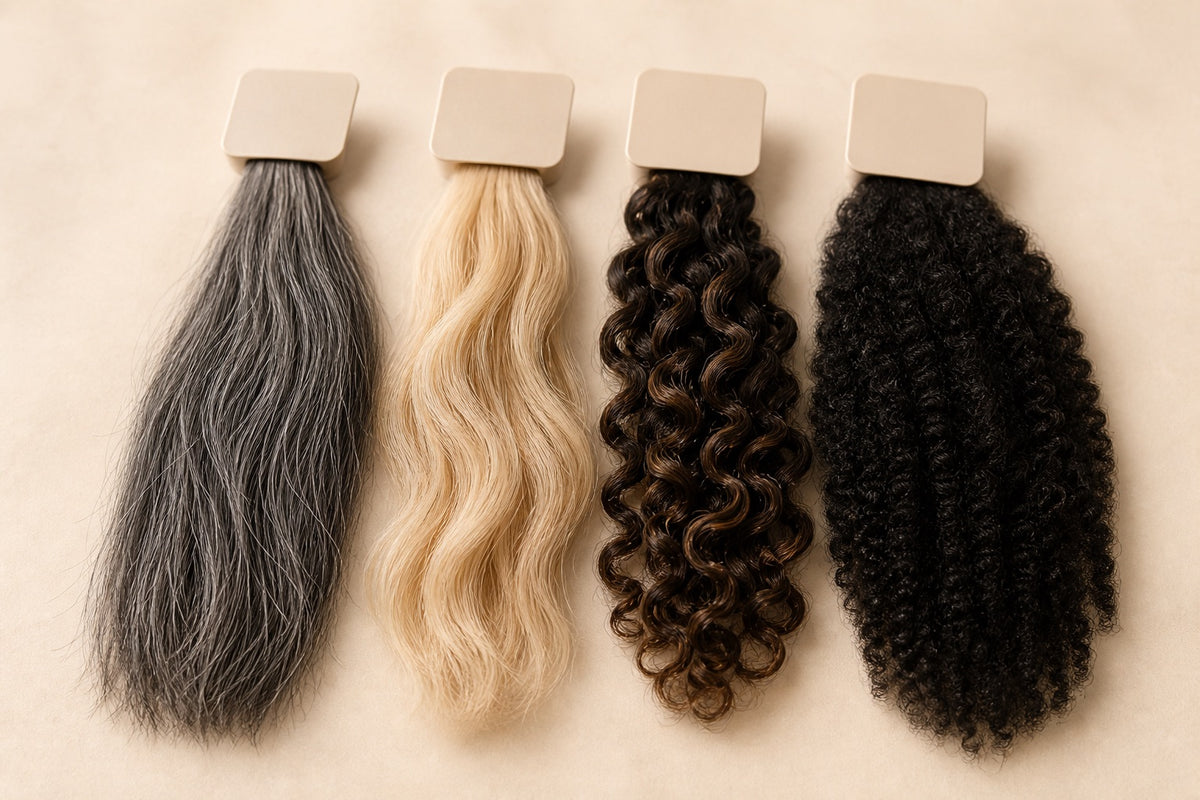
Grey, blonde, natural black, curly, coily, straight, and wavy tresses can all behave differently in product evaluation. If the test substrate does not match the claim or the consumer use case, the result may be hard to interpret.
Color baseline matters
Hair color is not just appearance. It often reflects processing history, porosity, and the kind of response a chemist can measure.
Natural black or dark brown hair may be useful for baseline cleansing, conditioning, shine, and general handling tests. But it is not the right substrate for every color study because many dye changes will not be visible or measurable in the same way.
Blonde or lightened hair is often used for tone, dye uptake, color deposit, color fade, and repair studies. But blonde hair is usually more processed than natural dark hair, so its porosity and strength may be different.
Grey or salt-and-pepper hair can be important for grey-coverage testing, tone studies, and products aimed at aging hair. Grey hair may also behave differently in texture, feel, and dye response depending on the source and preparation.
The key is to specify the baseline. "Human hair" is not enough for color testing.
Texture geometry matters
Straight, wavy, curly, and coily hair differ in geometry. That changes product distribution, surface contact, detangling, breakage risk, frizz behavior, and the way consumers handle the hair.
A formula that spreads easily on straight hair may not distribute the same way through coily hair. A detangling product may show different performance on loose waves versus tight curls. A frizz-control product should be evaluated on the texture where frizz control is relevant.
For type 3 and type 4 testing, the curl pattern is part of the substrate. If the pattern is not controlled or described, the result may not translate.
Product categories affected
Color and texture can influence many tests:
- Dye uptake and tone: baseline color and porosity matter.
- Grey coverage: percentage and distribution of grey hair matter.
- Conditioning: texture and damage state affect slip and combability.
- Anti-frizz: curl pattern and humidity response matter.
- Breakage: combing method and texture geometry matter.
- Shine: straight hair may reflect light differently from textured hair.
- Leave-in products: distribution and residue feel vary by texture.
The problem with generic tresses
Generic tresses can be useful for early screening, but they can hide important differences. If a product is intended for curly hair, testing only on straight hair may miss handling and distribution issues. If a product is intended for grey coverage, testing only on dark hair does not answer the claim.
The more specific the claim, the more specific the substrate should be.
A practical specification method
Before ordering tresses, define:
- Target consumer hair color.
- Target texture or curl pattern.
- Whether the hair should be natural, bleached, grey, dyed, or treated white.
- Whether porosity should be high, low, or typical for the target.
- Whether damage is part of the test.
- How product dose will be adjusted for texture and tress weight.
This helps avoid comparing a formula on one substrate while making claims for another.
The takeaway
Color and texture are not just visual choices. They are testing variables. For cosmetic chemists, specifying them clearly can make product evaluation more relevant and more defensible.
Prarvi prepares and quotes research tresses by specification for color, texture, length, form, and testing use: request a research quote.
Continue the series
- Hair Tresses as Test Substrates: What Cosmetic Chemists Should Control Before Testing
- Raw, Bleached, Processed or Damaged Hair Tresses: Choosing the Right Test Substrate
- Porosity, Cuticle Alignment and Donor Mixing: Hidden Variables in Hair-Care Testing
- A Hair Tress Specification Checklist for Cosmetic Formulators
