
In this article
Human-hair sew-in extensions can be reused when the hair and weft remain suitable for another installation. Assess their condition after removal rather than relying on their age, price or a promised number of wears. Gentle takedown, appropriate cleaning and dry storage help you evaluate and care for the set you already own.
There is no guaranteed number of installations. Previous colouring, heat, wear, construction and handling can all affect the decision. A Remy label describes cuticle direction in industry usage; it does not establish how much useful wear remains in a particular set.
First, a quick refresher: what a sew-in actually is
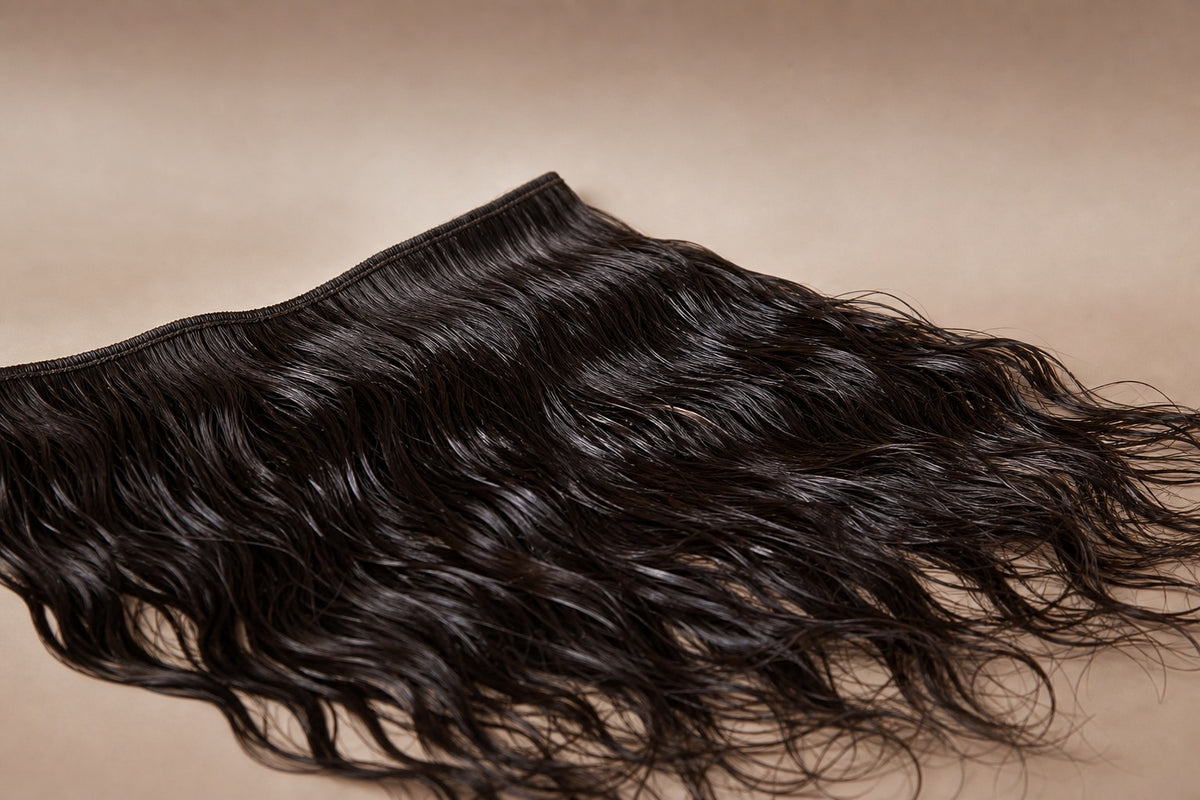
A sew-in, also called a weave, is an installation in which wefts or tracks are stitched onto a supporting braided base. The hair, its stitched seam and the installation are different things. Reusing an extension does not mean leaving the same installation in place indefinitely.
Check the hair, the seam and the installation separately
- Hair condition: after cleaning and drying according to its care instructions, look for persistent tangling, breakage, uneven ends or a change in handling. These are reasons for closer assessment, not proof of one particular processing history.
- Weft condition: inspect the track for loose stitching, fraying and hair releasing at the seam. Ask an experienced stylist whether repair or re-wefting is practical. It is not possible to promise repairability from the appearance of the hair alone.
- Installation suitability: discuss the support, weight and placement with your stylist before reinstalling. A set that still looks attractive is not automatically suitable for your scalp or natural hair.
Touch and combing are observations about the set today. They do not authenticate donor count, collection origin or remaining lifespan. This checklist does not diagnose cuticle damage.
How long should a sew-in stay in?
Agree a removal and maintenance schedule with your stylist rather than waiting for the extensions to look worn out. The American Academy of Dermatology recommends short periods of weave wear and removal if a weave causes pain or scalp irritation. Its six-to-eight-week advice concerns braids; it is not a guarantee that every sew-in is safe for that duration.
The removal: protect what you want to reuse
Wear and removal can both affect condition. If you cannot clearly identify the sewing thread or safely reach the tracks, have a stylist remove them.
- Cut the thread, not the hair. Work carefully, track by track, without cutting into your natural hair or the weft seam.
- Do not pull through resistance. Stop and release the attachment rather than yanking the track free.
- Keep tracks organised. Lay them separately so they do not become tangled together during cleaning.
- Detangle gently. Follow the supplier's instructions for the texture and construction. Work from the ends upward without forcing a comb through knots.
How to refresh and reuse your wefts
- Cleanse gently. Use products compatible with the hair and construction. Avoid scrubbing the lengths into a tangled pile, and rinse thoroughly.
- Condition as directed. Conditioner can improve slip and handling; softer-feeling hair is not proof that existing structural damage has been reversed.
- Dry completely. Support the wefts while drying and check the seams as well as the lengths before storing.
- Assess the ends. A stylist can advise whether trimming would improve the blend without losing too much length or fullness.
- Store clean and dry. Keep tracks loosely arranged in suitable protective storage, away from moisture and dust. Follow the supplier's instructions for preserving the texture.
While it is installed: care for both your hair and your wefts
Follow a cleansing and maintenance routine suited to your scalp, natural hair and extensions. Avoid unnecessary heat and friction, and observe the finished product's styling limits. Do not treat discomfort as something to tolerate until the next appointment. Pain, irritation or noticeable thinning warrants prompt attention; consult a dermatologist about hair-loss concerns.
Thinking about colour? Read this first
Human hair occurs naturally in more than one colour; Natural Black (#1B) is a shade designation, not the only possible natural colour. Ask what colouring, lightening or texture treatment your particular set has already received. Its current shade does not reveal its complete history.
Before another colour service, ask a qualified colourist to assess the used hair and follow the product's instructions. Do not assume that an older set is a risk-free place to experiment or that every human-hair extension can tolerate lightening. If you prefer a prepared shade, compare our blonde extensions with your intended colour and texture before ordering.
When it is time to retire or rehome a weft
If the set remains difficult to detangle without force, breaks substantially, or cannot be secured or blended satisfactorily, discuss replacement with your stylist. A damaged seam and damaged lengths may call for different decisions; neither should be diagnosed from a marketing label.
- Repurpose: material unsuitable for another installation may still be useful for non-wearable craft or practice work.
- Donate only after checking: read the receiving organisation's current requirements and ask specifically whether it accepts previously worn extensions. Do not assume a human-hair label establishes eligibility.
- Replace to a specification: compare the required length, mass, texture and construction, rather than expecting a new set to solve an installation problem.
Frequently asked questions
Can you reuse sew-in hair extensions?
Yes, when the hair and weft remain suitable for reuse and a fresh installation is appropriate. Check the set after removal and cleaning; appearance alone does not establish suitability.
How many times can I reuse a sew-in or a set of bundles?
There is no fixed count. Assess condition each time, taking previous processing, wear and construction into account. Neither raw, virgin nor Remy wording guarantees a number of installations.
Can I reuse wefts that were bleached or coloured?
Possibly. Their condition and previous treatment matter. Have them assessed before reinstalling or applying further colour; do not assume every coloured set has the same tolerance.
How should I store wefts between installs?
Clean and completely dry, with tracks arranged to limit tangling and protected from damp and dust. Follow the care instructions for that texture and construction.
Will reusing extensions cause hair loss?
New and reused extensions can both place tension on natural hair. Reuse does not make an installation risk-free. Avoid tight placement, address discomfort promptly and seek professional advice for scalp irritation or thinning. Extensions provide cosmetic styling, not medical treatment.
My seam is loose but the lengths look good. Must I replace everything?
Ask a stylist whether the construction can be repaired. Do not assume either that the entire set is finished or that every damaged track can safely be reused.
Further reading
Need help choosing your next set?
Compare the texture, length and construction you need, or contact us for matching help.
