
In this article
If you’ve felt the sticker shock on genuine Indian temple hair lately, you’re not imagining it — and you’re not alone. Here’s what’s really happening upstream, and how to keep sourcing hair you can stand behind.
Why the supply tightened in the first place
When temples across India closed during COVID, one quiet ripple effect reached salons and extension buyers worldwide: tonsuring — the ritual head-shaving that is the original source of authentic Indian temple hair — paused for an extended stretch. No tonsuring means no fresh donor hair entering the supply chain. Layer historic, pent-up global demand on top of a reduced stock, and you get exactly what the market saw: acute scarcity in the longer lengths and prices climbing fast at Indian auctions.
For an end consumer or a salon owner, that math shows up at checkout. Suddenly the cost of doing the work you’ve always done is real, and it changes how you buy.
How long will the shortage last?
The encouraging news: Tirupati and many other temples have reopened, daily life in India has largely normalized, and pilgrims are traveling back. As that rhythm returns, donor stock is expected to climb again.
The honest caveat: because there’s a real backlog of demand built up over the closure years, no one can promise a precise date for “back to normal.” Recovery is underway — but it’s gradual, not a switch flip. Plan your buying with that runway in mind.
A quick word on what “temple hair” actually is
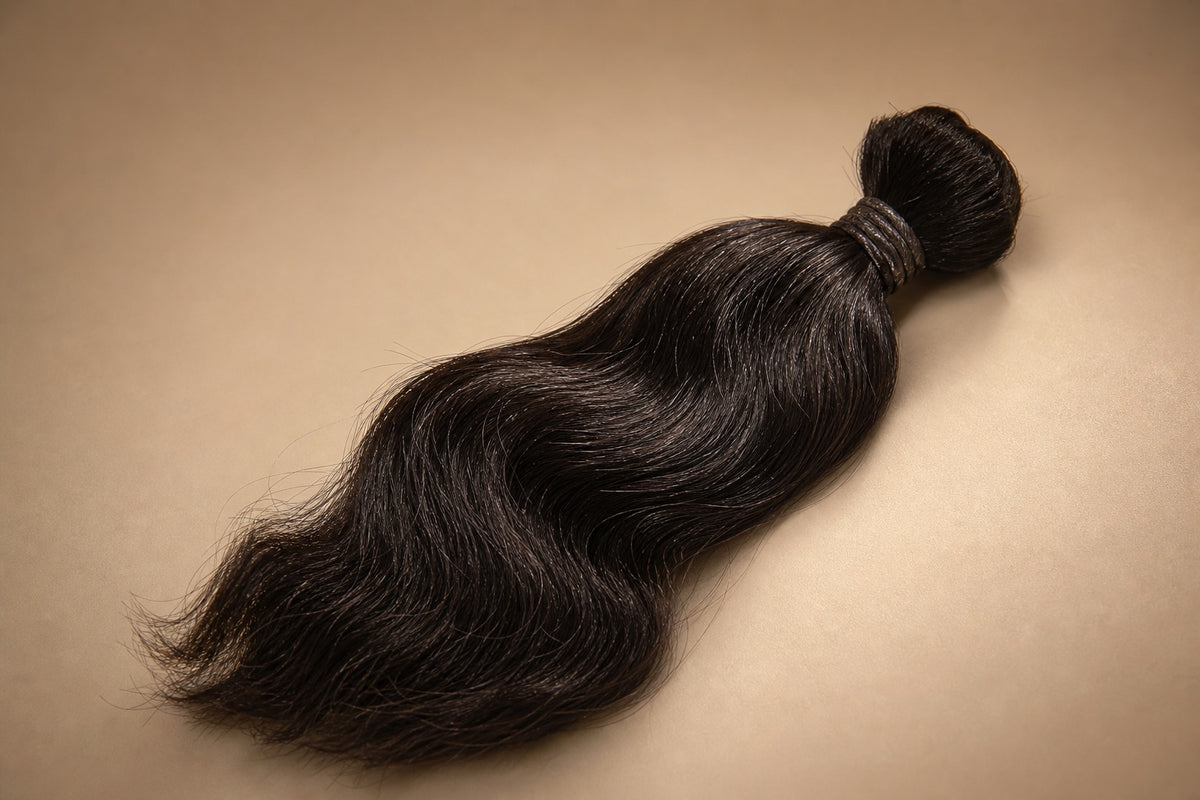
Authentic temple hair is single-donor, Remy hair — the cuticles are intact and aligned in one direction, which is what keeps it tangle-resistant and natural-looking through wear. Its true origin is Indian; reputable suppliers don’t dress it up as “Brazilian” or “Peruvian.” If you want the full primer, our guide to Indian Remy hair walks through exactly what to look for.
One more truth worth keeping straight, especially when supply is tight and shortcuts get tempting: genuinely raw, unprocessed hair is natural-black, natural-texture hair from a single donor. Hair that’s been steam-set into a different curl pattern or bleached to a lighter shade is still beautiful, single-donor, virgin hair — but it isn’t “raw.” If a seller blurs that line to justify a price, treat it as a flag. We break the distinction down in raw vs. processed human hair.
How to keep sourcing high-quality hair right now
Stocks are down and prices are up — but quality hasn’t disappeared. The suppliers who refuse to dilute their lines with non-Remy hair have kept their sourcing relationships intact, paid the higher auction prices, and continued building honest product. The whole game right now is choosing those partners.
- Buy from suppliers who won’t touch non-Remy. A house that compromises on cuticle integrity when supply is easy will compromise harder when it’s scarce.
- Ask where the hair comes from. Single-donor, Indian-origin, cuticle-aligned. Vague or shifting origin stories are a warning sign.
- Match before you commit to volume. Order a sample to confirm shade and texture against your client’s hair before placing a larger order — our shade & texture match samples exist for exactly this.
- Lock in your shade strategy. If you need lighter tones, remember those come from controlled lifting, not nature — plan lead time accordingly.
- Work with a partner who stays in stock. At Prarvi Hair, we’ve continued sourcing genuine temple Remy through the shortage rather than swapping in lesser hair.
Are there real alternatives to temple hair?
Honestly? Not a true one. Single-donor Indian temple Remy is unique in cuticle integrity and longevity, and there’s no drop-in substitute that behaves the same way. The pragmatic move isn’t to chase a knock-off — it’s to stick with a trustworthy supplier who can actually solve the sourcing problem for you while the market recovers. Browse what’s currently available in our natural virgin collection.
FAQ
Q: Is the price increase permanent? Prices rose because of genuine scarcity, not a markup grab. As temple donor stock rebuilds, pressure should ease — but with a real demand backlog, expect a gradual return rather than an overnight drop.
Q: Can I just buy cheaper hair to bridge the gap? You can, but non-Remy or mixed-cuticle hair tangles, mats, and disappoints clients — which costs more in redos and reputation than you save. In a shortage, quality control matters more, not less.
Q: How do I confirm hair is authentic before a big order? Start with a sample to verify Remy quality, shade, and texture in person. A supplier confident in their hair will welcome it.
Salon & Wholesale SourcingOrder a Match Sample
References & further reading
Shopping for raw single-donor Indian hair?
Bundles, closures, frontals, wigs & toppers — raw, single-donor Indian hair, US-based and shipped fast from New Jersey. Not sure what to pick? We'll help you match texture and length.
