
In this article
Before it ever became a glossy bundle on your vanity, your Indian virgin hair began as something far more romantic — a quiet offering, whispered prayers, and a tradition centuries in the making.
You already know that origin matters. When you’re investing in extensions, a wig, or a topper, you want to know where the hair actually comes from — not a marketing fairytale, but the real story. With Prarvi, that story happens to be genuinely beautiful, and it starts at the temples of southern India.
The Legend of Neela Devi
One of the most beloved origin stories traces back to Tirupati, in the hills of Andhra Pradesh. As the folklore goes, a deity once lost a lock of hair. A princess named Neela Devi noticed the loss and, without hesitation, cut a portion of her own hair and — with what the legend describes as her magical touch — gifted it to restore what was missing. Moved by her devotion, it’s said the gesture earned eternal gratitude.
To honor her, one of the seven sacred hills surrounding the temple was named Neeladri, after Neela Devi herself. And from that single act of generosity, a tradition was born: devotees travel from across India to offer their hair at the temple as an expression of faith, gratitude, and surrender of ego — a ritual known as tonsuring.
From Devotion to Your Dresser
Here’s what makes this so special: the hair you wear isn’t harvested or taken — it’s given. Millions of pilgrims voluntarily offer their hair each year as a sacred act. The temples then responsibly steward what remains, and it’s carefully sorted, cleaned, and prepared for a second life.
That ethical, consent-rooted origin is part of why single-donor Indian hair is so prized worldwide. It also explains the quality you can feel: because it grew on real heads, untouched by harsh chemical processing, it carries a natural movement and resilience that synthetic and heavily-processed alternatives simply can’t fake.
So, What Exactly Is “Raw” Indian Temple Hair?
This is where a little honesty goes a long way — because the word “raw” gets thrown around loosely in this industry, and you deserve the truth.
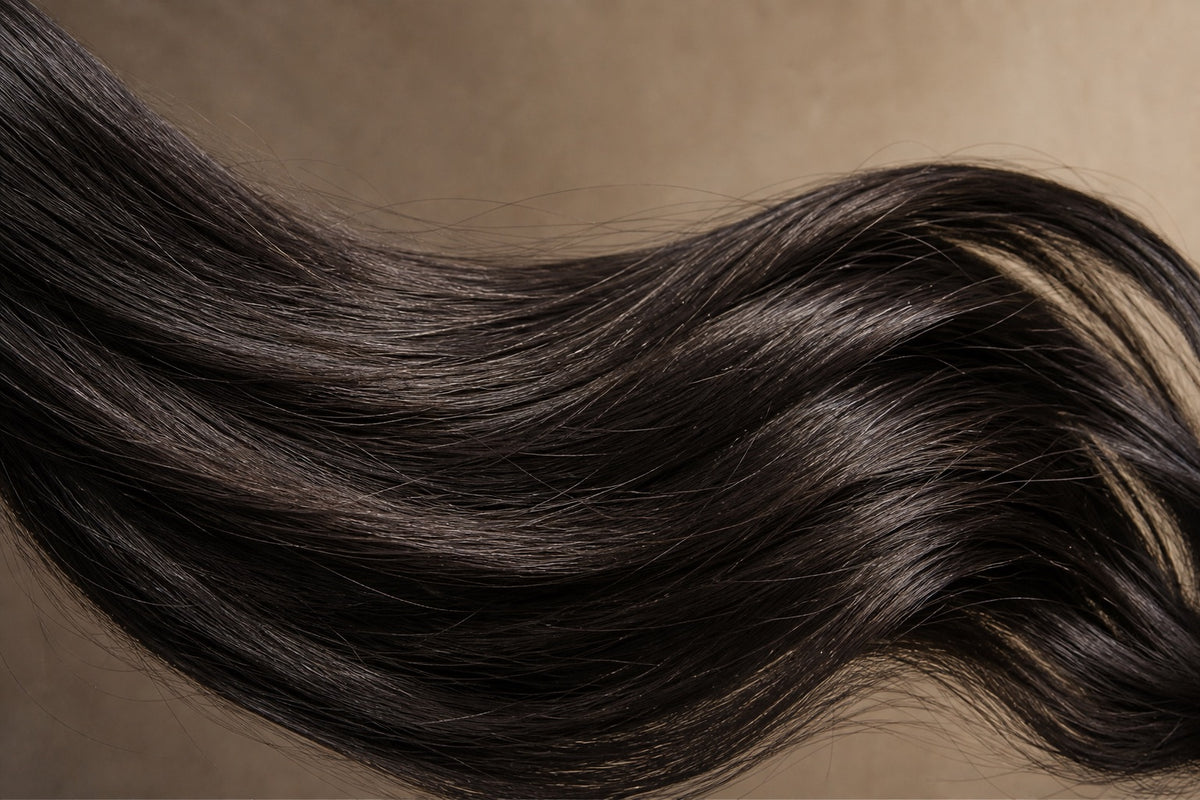
- Raw / unprocessed means the hair is in its genuinely natural state: its natural texture, its natural color (Natural Black, around shade #1B), with the cuticles intact and aligned in one direction. No dye, no bleach, no steam-setting.
- Virgin means the hair comes from a single donor and has never been permanently dyed. It’s a mark of purity and consistency — but here’s the nuance: virgin hair can still be steam-set into a new texture or lifted to a lighter color.
In other words, only three textures occur naturally — straight, natural wave, and natural curl — and the only truly natural color is Natural Black. Every gorgeous blonde, every defined deep wave, every uniform curl pattern you see has been achieved, beautifully, through steam-setting or careful lifting. So if a bundle has a perfectly uniform curl, that’s a sign of skilled craftsmanship — not raw, unprocessed hair. Both are wonderful. They’re just not the same thing, and any honest brand should tell you which is which.
Why This Matters When You Shop
Understanding the folklore isn’t just charming dinner-party trivia — it helps you choose well:
- Origin is Indian, full stop. If a seller markets “Brazilian” or “Peruvian” temple hair, be skeptical — authentic single-donor temple hair comes from India.
- Match by hair type, not labels. Choose based on whether your own hair is fine, coarse, straight, wavy, or curly — that’s what determines a seamless blend.
- Decide what you actually want. Craving the purest, most natural option? Reach for genuinely raw, natural-texture hair. Want a specific shade or curl? Steam-set and lifted SKUs give you endless versatility without sacrificing quality.
A quick, kind reality check on tangling: no human hair is truly tangle-proof. Intact, aligned cuticles in quality virgin hair dramatically reduce matting and shedding, which is exactly why single-donor hair behaves so beautifully — but a little care still goes a long way.
Frequently Asked Questions
Is Prarvi hair really sourced ethically? Yes. Our Indian hair traces back to the temple-offering tradition, where hair is voluntarily given by devotees — never taken without consent.
Is “virgin” the same as “raw”? Not quite. Virgin means single-donor and never permanently dyed. Raw means genuinely unprocessed — natural texture and natural Black color, no steam-setting or lifting. A virgin bundle can still be steam-set or color-lifted.
Will raw temple hair work for my hair type? It blends best when matched to your own texture. Fine, coarse, straight, wavy, and curly hair each pair best with a comparable texture — so match by hair type rather than by name or origin label.
Why does some hair have a perfectly uniform curl? Because it’s been expertly steam-set. Truly raw hair has a more organic, varied pattern. Uniform curls are a craft, not a flaw.
Shop Natural Virgin HairMatch Your Shade & Texture
References & further reading
Shopping for raw single-donor Indian hair?
Bundles, closures, frontals, wigs & toppers — raw, single-donor Indian hair, US-based and shipped fast from New Jersey. Not sure what to pick? We'll help you match texture and length.
